Recent books:


More books

Reviews of my work
Review of Why Read Wollstonecraft Today in History of European Ideas.
Wollstonecraft wrote in and for a time that experienced the breakdown of the international order, protectionist economic policies, increased government censorship, liberalizing movements facing a reactionary backlash, the rapid enrichment of a small class of commercial elites and the extreme poverty of workers performing alienating and precarious work, disruptive new technologies, deep divides over race and empire, and, of course, a sustained resistance against women’s demands for equal social and political freedom from within an entrenched patriarchy. If we recognize any of that today, then the pertinent question is, why not read Wollstonecraft? And as we do so, Bergès is an exceptional guide.
Review of Sophie de Grouchy’s Letters on Sympathy in Notre Dame Philosophical Reviews.
It remains to say a word about the quality of Bergès’ translation. Grouchy worries about the distorting political power of rhetoric, but she also clearly delights in exercising her own rhetorical skill. She makes effective use of anaphora and apostrophe, of colorful illustrations and long, complex sentences that gather emotional steam as they run along. Bergès does an exceptionally good job of preserving all these elements of Grouchy’s style. Whereas McClellan’s 2008 translation smooths over much of the Letters‘ grammatical complexity, Bergès does more to preserve Grouchy’s sometimes baroque reflexive constructions, and often resists chopping up her longer sentences. These choices maintain the text’s charm and make it feel more of its time. They also may make Bergès’ translation a touch less accessible for students, but that small downside is more than compensated for by the additional resources that accompany the text, especially the informational footnotes. In addition to highlighting connections to other philosophers of the Enlightenment and Revolution, some of these notes also indicate links to recent debates over topics like standpoint epistemology and the philosophy of horror cinema. I can easily imagine these latter notes piquing student interest and prompting lively discussion.
Review of Sophie de Grouchy’s Letters on Sympathy in The European Journal of Economic Thought.
Until recently, however, these intellectual figures have been mainly presented as the supporting cast of their male counterparts: as salon hostesses, correspondents or companions. Today the importance and originality of their contribution are finally in the process of being recognised, leading to the publication of works that have been for a long time unavailable to modern readers. It is in this spirit that the editors Sandrine Bergès and Eric Schliesser present, in the series Oxford New Histories of Philosophy, the English version of the Letters on Sympathy by Sophie de Grouchy, originally published in 1798 as an addition to her French translation of Adam Smith’s Theory of Moral Sentiments.
Wollstonecraft scholars will almost certainly find this text now among the critical texts with which one ought to engage when writing on Wollstonecraft. However, this text should also appeal to historians of philosophy interested in the philosophical moves made throughout modernity and between antiquity and modernity. Contemporary philosophers with interests in social and political philosophy, feminist philosophy, or ethics will find much as well. Taken altogether, The Social and Political Philosophy of Mary Wollstonecraft not only shows many new paths taken in Wollstonecraft scholarship, but also invites scholars to pursue further research by providing new opportunities for dialogue with her text.
Review of The Social and Political Philosophy of Mary Wollstonecraft in Hypatia.
These essays are best read as examples, often admirable, of what happens when philosophers read Wollstonecraft. They offer insights into intellectual influence, from Plato and Aristotle to Spinoza and beyond, and map Wollstonecraft’s place in traditions of thought, paying particular and detailed attention, in line with current trends in the field, to varieties of republicanism. Here the reader will find essays that offer a deeper understanding of Wollstonecraft’s thinking on several of her most important terms (among them: reason, passion, independence, rights, duty).
Particularly in the closing contributions of the editors, but also in the general framework of the book, the philosophy of Wollstonecraft is presented in the context of current discussions, from a feminist as well as from a general political perspective. The collection abandons the schemata of fruitless one-dimensional interpretations that position Wollstonecraft as either a proto-feminist or a rationalist misogynist. Her feminist ideas are embedded in a broader reflection that begins by retracing her sources back to the classics, and follows by positioning her thoughts with the republican ideas of natural laws, pointing to the relevance of her ideas in identifying questions about particular rights and duties in a socially and politically diverse society.
Review of A Feminist Perspective on Virtue Ethics in Ethical Theory and Moral Practice
A Feminist Perspective on Virtue Ethics” includes much that should prompt further discussion. In particular, the book will be of interest to those who want to correct for existing gaps in their knowledge of the historical development of virtue ethics, in addition to being a solid starting point for those interested in finding out more about the specific theorists discussed in the earlier chapters.
Review of Plato on Virtue and the Law in the Journal of Hellenestic Studies.
All books listed
Monographs
2026: The Home: a Philosophical Project New York: Oxford University Press.
2026: Why Read Wollstonecraft Today? Cambridge: Cambridge University Press.
2022 Liberty in their names: Three republican women of the French Revolution. Monograph. London: Bloomsbury.
2022 Olympe de Gouges. Cambridge Elements on Women in the History of Philosophy. Cambridge: Cambridge University Press.
2019 Sophie de Grouchy’s Letters on Sympathy, Bergès, S (trans., ed.) and Schliesser, E (ed.), OUP, NY, Oxford New Histories of Philosophy Series.
2015 Virtue Ethics: A Feminist Perspective. Palgrave Macmillan.
2013 Wollstonecraft‘s A Vindication of the Rights of Woman, Routledge Great Books Series (previously Guidebooks).
2009 Plato, Virtue and the Law, Continuum Studies in Ancient Philosophy.
Edited Volumes
2016. The Social and Political Philosophy of Mary Wollstonecraft, Bergès, S. and Coffee, A. (eds). Oxford, OUP, Mind Association Occasional Series.
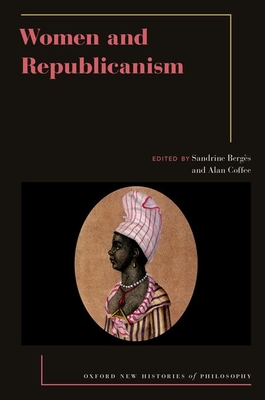
2026 Women and Republicanism, ONHP, with Alan Coffee. New York: Oxford University Press.
2019. The Wollstonecraftian Mind, edited with Alan Coffee (KCL) and Eileen Hunt Botting (Notre Dame). London: Routledge.
2018. Women Philosophers on Autonomy: Historical and Contemporary Perspectives, Bergès, S. Siani, A. (eds). Routledge.
Published articles
Feminist History of Philosophy:
2026 ‘Slavery, the French Revolution and the Childhood Argument’ British Journal for the History of Philosophy. 34 (4):760-781.
2024 “Early modern women philosophers and politics: Accommodating sphere restrictions.” Philosophy Compass 19 (6):e13004.
2024 “Mary Wollstonecraft’s Influence on French Revolutionary Educational Reform.” Women’s Writing, 31(3), 441–455. https://doi.org/10.1080/09699082.2024.2360616
2023 “Reviewing Women’s Philosophical Works During the French Revolution: the case of P.-L. Roederer.” History of European Ideas DOI: 10.1080/01916599.2023.2230572
Bergès, Sandrine and Coffee, Alan. “Cocks on Dunghills – Wollstonecraft and Gouges on the Women’s Revolution” SATS, 2022. Here
Bergès, S. Domesticity and Political Participation: At Home with the Jacobin Women. Political Research Quarterly. 2022. Here.
‘Women, Revolutions and Republicanism’ lead article for the Australasian Philosophical Review, 2020, curated by Jacqueline Broad. Here
‘’Olympe de Gouges vs Rousseau: Happiness, Primitive Societies and the Theatre.’ Journal of the American Philosophical Association, 4(4): 433-451. 2018
“ What’s it got to do with the price of bread? Condorcet and Grouchy on Freedom and Unreasonable Laws in Commerce”. European Journal of Political Theory. 2018
“Lucretia and the impossibility of female republicanism in Margaret Cavendish’s Sociable Letters”. Hypatia. 2018
‘Family, Gender and Progress: Sophie de Grouchy and her exclusion in the publication of Condorcet’s Sketch of Human Progress.’ Journal of the History of Ideas 29/2. 2018
“Secrétariat, collaboration et auto-publication dans la France révolutionnaire.” Philosophiques, 44:2. 2017
‘A Republican housewife: Marie-Jeanne Phlippon Roland on women’s political role’. January 2016 Hypatia.
‘On the Outskirts of the Canon: The Myth of the Female Philosopher and What to Do About It’. Metaphilosophy, 46/3, July 2015.
‘Sophie de Grouchy on the Cost of Domination in the Letters on Sympathy and Two Anonymous Articles in Le Republicain’. The Monist. 98/1, 2015.
‘Is Motherhood compatible with political participation? Sophie de Grouchy’s Care-based Republicanism.’ Ethical Theory and Moral Practice. 18/1, 2015.
‘Teaching Christine de Pizan in Turkey’. Gender and Philosophy, 25/5, 2013.
‘Re-thinking twelfth-century virtue ethics: the contribution of Heloise.’ British Journal for the History of Philosophy, 21.4, 2013.
‘Mothers and Independent Citizens: making sense of Wollstonecraft’s supposed essentialism’ Philosophical Papers, 42/3, 2013.
Contemporary Social and Political Philosophy
‘Is Not Doing the Washing Up Like Draft Dodging? The Military Model for Resisting a Gender Based Labour Division’ Journal of Applied Philosophy. DOI:10.1111/japp.12152 2017.
‘Why the Capabilities Approach is Justified’ in the Journal of Applied Philosophy, 24/1, 2007.
Ancient Philosophy
‘Understanding the role of the laws in Plato’s Statesman‘ Prolegomena, 9/1, 2010.
‘Virtue Ethics, Politics and the Functions of Laws: The Parent Analogy in Plato’s Menexenus. ‘ Dialogue, XLVI, 2, 2007.
‘Loneliness and Belonging: Is Stoic Cosmopolitanism Still Defensible? ‘ Res Publica 11/1, 2005.
‘Virtue and the Laws: The Parent Analogy in Plato’s Crito’ Yeditepe’de Felsefe, 2004.
Most of my published papers are listed on my Phil Papers page.
Selected Book Chapters
2026 ‘Anna Julia Cooper on the French Republican’s Attitude to Slavery’. In Berges and Coffee (eds.) (2026)
2025 ‘From the French Revolution to Nineteenth Century America: Germaine de Staël’s Influence on Louisa May Alcott and Anna Julia Cooper ’. In Alison Stone and Lydia Moland (eds) The Oxford Handbook to Nineteenth Century Women Philosophers. Published online 18 July 2023: https://doi.org/10.1093/oxfordhb/9780197558898.013.37
2023 ‘Virtue and Moral Obligation’ in Karen Detlefsen and Lisa Shapiro (eds.) Routledge Handbook of Women and Early Modern European Philosophy.
2022 ‘Gender, Liberty, Participation and Virtue: What the Eighteenth Century Can Teach Us About Republicanism’ forthcoming in Rethinking Liberty Before Liberalism, edited by A. De Dijn and H. Dawson, Cambridge: Cambridge University Press.
2020 In press ‘Wollstonecraft’ and ‘Grouchy’ in Anthologie des Femmes Philosophes, edited by A-L Rey, Garnier. Forthcoming.
2019. Capabilities, Adaptive Preferences, and Education. in The Wollstonecraftian Mind, edited with Alan Coffee (KCL) and Eileen Hunt Botting (Notre Dame). London: Routledge, 464-475.
2019. Wollstonecraft. In G. Oppy, A Companion to Atheism and Philosophy. Oxford: Wiley Blackwell.
2018. Margaret Cavendish on Women’s Autonomy, Political Skepticism and Republican Values. In S. Bergès and A. Siani (Eds.), Women Philosophers on Autonomy. Abingdon-on-Thames: Routledge.
2016. Wet-nurses and Political Participation: the Republican Approaches to Motherhood of Mary Wollstonecraft and Sophie de Grouchy. In S. Bergès & A. Coffee (Eds.), The Social and Political Philosophy of Mary Wollstonecraft. Oxford: Oxford University Press.
2013. Elitism and Expertise: Virtue in the Republic and the Laws. In A. Amaya & H. H. Lai (Eds.), Law, Virtue and Justice. Oxford: Hart Publishing.
2006. The Hardboiled Detective as Moralist : Ethics in Crime Fiction. In T. D. J. Chappell (Ed.), Values and Virtues: Aristotelianism in Contemporary Ethics. Oxford University Press.
Encyclopedia Entries
2020 Bergès S. “Women Philosophers in the French Revolution (Gouges, Roland, Grouchy).” In: Jalobeanu D., Wolfe C. (eds) Encyclopedia of Early Modern Philosophy and the Sciences. Springer, Cham
2019 Berges, Sandrine, “Sophie de Grouchy”, The Stanford Encyclopedia of Philosophy (Winter 2019 Edition), Edward N. Zalta (ed.), URL = <https://plato.stanford.edu/archives/win2019/entries/sophie-de-grouchy/>.
2016 Berges, Sandrine “Mary Wollstonecraft (1757-1797)” Routledge Online Encyclopedia of Philosophy. https://www.rep.routledge.com/articles/biographical/wollstonecraft-mary-1759-1797/v-2
2012 ‘Moral Development’ in Vilhjalmur, A. and Chadwick, R. Encyclopedia of Applied Ethics, Elsevier.
Work in Progress
My most recent book projects:
Liberty in thy Name! is an intellectual biography of three French Revolutionary women philosophers: Olympe de Gouges, Manon Roland and Sophie de Grouchy. I live blog about writing it here.
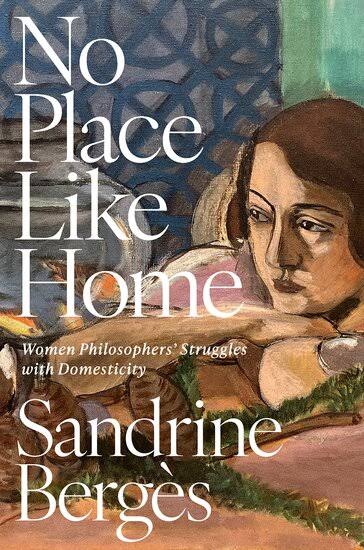
No Place Like Home, talks about how women philosophers from antiquity till the 20th century negotiated domesticity, its works and the restrictions it imposed on public life. I blogged about it in The Home: A Philosophical Project.
My current British Academy funded project, Finding Diversity in Enlightenment’s Philosophy’s Attitude to Abolitionism, falls within the field of history of philosophy and focuses on the abolitionist debates of the early modern and enlightenment periods in France and Britain. I will recover the marginalized voices that constituted an important part of those debates: Black men and women, white women, and members of religious minorities. The recovery of voices in the history of philosophy has so far focused mostly on white women philosophers whose work was in the areas of metaphysics and epistemology. My own distinctive contribution to this recovery project will be to recover voices by Black philosophers and white women philosophers as well as thinkers from religious minorities in political philosophy. What I will recover is a philosophical dialogue that was fed by a rich variety of voices, many of which were marginalized at the time and still are today.

